 Italiano
 English
 View larger
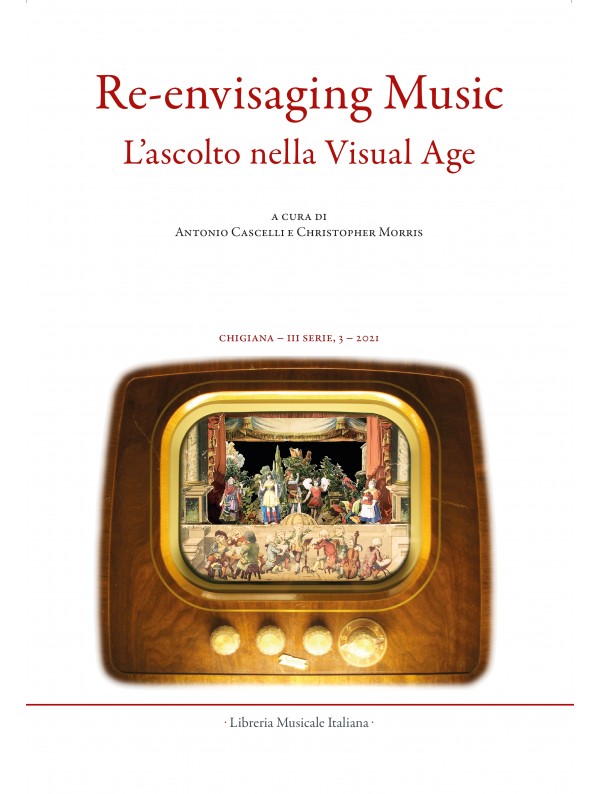
Between Music and Painting
Walter Ruttmann’s Opus Films
| Author | Henry Balme |
| Series | Chigiana |
| Nr. | III - 3 |
| Size | 17×24, XVIII+245 |
| Year | 2022 |
| ISBN | 9788855431514 |
In the years following World War I, European avant-garde artists faced the question of how painting could further develop after the advent of abstraction. Walter Ruttmann (1887–1941) proposed that the art form should respond to the accelerating experience of modernity by embracing temporality. Such a step brought painting closer to music, giving rise to “a temporal rhythm of optical events”. To test his theory Ruttmann created an abstract animated film entitled Lichtspiel Opus I. It received its official premiere at a Berlin cinema in 1921 with a score for string quintet composed by Max Butting. However, Ruttmann did not commission music for his subsequent abstract films (Opus II–IV, 1922–25). Apparently, he faced an aesthetic dilemma: was music in the form of sound necessary, or did film’s temporal (read: musical) nature render sound obsolete? Ruttmann’s early abstract films have been studied primarily by film historians, such as Jeanpaul Goergen, Michael Cowan and Gregory Zinman. However, these scholars do not emphasise music as a core concern for the painter-filmmaker. This article redresses this imbalance by focusing on the critical role music played in Ruttmann’s conception of these films. It argues that the sounding Lichtspiel Opus I and the silent Opus II–IV epitomize two dichotomous conceptions of film: intermediality and medium specificity. Studying the films within these frameworks offers a new perspective on how artists and critics negotiated film’s artistic status against the background of the established arts of music and painting in the Weimar Republic.